How to Clean a Pickleball Paddle Without Killing the Face
Dirt and ball plastic dull spin and feel. Clean the face gently, protect the edge guard, and store the paddle so it lasts longer.
By Alex Turner
Paddlefoundry is reader-supported. As an Amazon Associate we earn from qualifying purchases. Learn more.
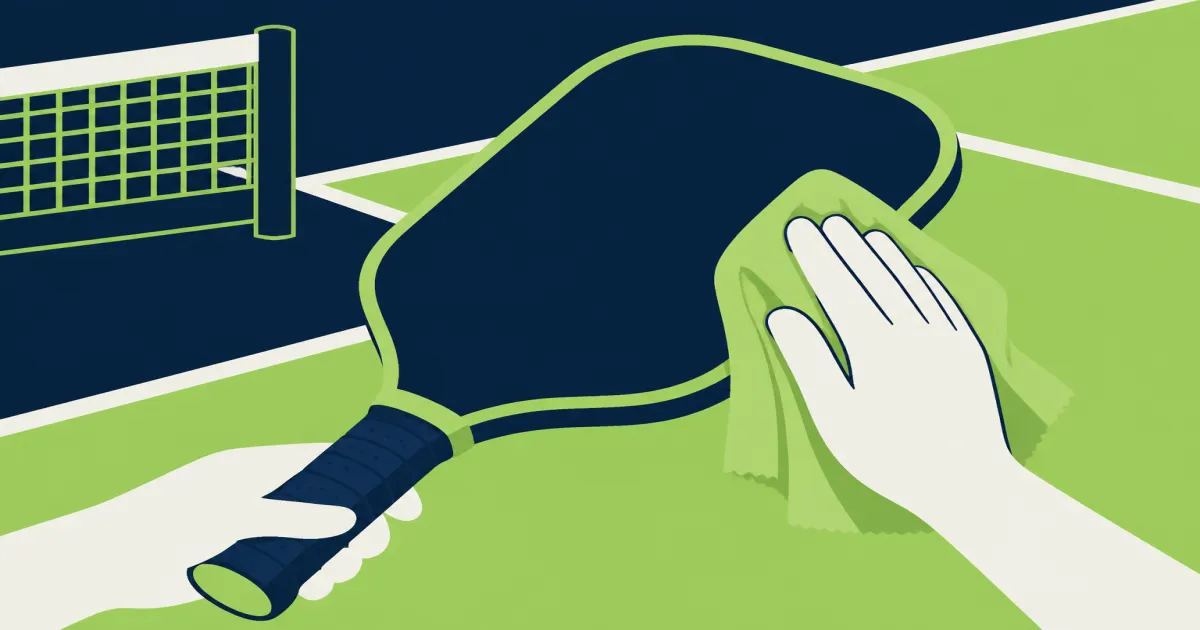
The short answer: How to clean a pickleball paddle is mostly gentle face care: wipe dirt and ball residue with a soft damp cloth, dry fully, and avoid harsh chemicals or scrubbing that strips texture. Protect the edge guard, keep the grip fresh, and store the paddle out of hot cars.
A dirty face feels dead even when the core is fine. This guide covers how to clean a pickleball paddle without wrecking grit, plus edge guard care, storage, and habits that quietly shorten paddle life. Methods are research-based from manufacturer care notes and common player practice. We have not lab-tested every cleaner on every face material.
If you are still shopping specs, pair this care guide with how to choose a pickleball paddle and pickleball paddle thickness explained. Clean technique does not fix a paddle that never matched your game.
Why paddles get dirty (and why it matters)
Outdoor courts leave dust, asphalt grit, and sunscreen on the face. Balls leave plastic smear. Indoor gym floors add dust and shoe rubber. That film fills texture and changes how the ball leaves the paddle.
Players often blame "dead core" when the real issue is a glazed face. A two-minute wipe can restore feel more cheaply than a new paddle. Cleaning will not resurrect a cracked core or a peeled edge, but it keeps a healthy paddle honest.
Sweaty grips are a separate problem. A clean face with a slick handle still causes late swings. Wipe the face and refresh the grip on different schedules.
Face wipe: the routine that covers most sessions
For everyday cleaning:
- Brush loose grit off with your hand or a soft dry cloth.
- Dampen a microfiber cloth with water. Wring it well. The cloth should be damp, not dripping.
- Wipe both faces in smooth passes. Do not grind dirt in circles with pressure.
- For stubborn ball film, add a drop of mild dish soap to the cloth, then wipe again with a clean damp cloth to remove soap.
- Dry immediately with a second cloth. Do not air-dry standing in a wet sleeve.
That routine answers how to clean a pickleball paddle for most recreational players. Do it after dusty outdoor days or whenever the face feels chalky.
Avoid steel wool, magic erasers that abrade texture, acetone, alcohol soaks, and kitchen degreasers. If a manufacturer lists an approved cleaner, follow that first. When instructions conflict, choose the gentler option.
Grit and texture: clean without stripping
Many modern paddles rely on surface texture for bite. Dirt fills that texture. Over-cleaning with abrasion removes it. Your job is to lift contamination without sanding the face.
Signs you cleaned too hard:
- Face looks shiny and polished where it used to feel matte
- Spin drops suddenly after a scrub session
- Soft cloths leave black grit that looks like face material, not court dust
If texture is worn from months of play, cleaning will not rebuild it. At that point you are deciding whether the paddle still meets your game, not whether one more wipe helps. Thickness and face construction still drive feel more than marketing spin claims; see pickleball paddle thickness explained.
Some players use specialty paddle erasers. If you try one, use light pressure and stop when residue is court dirt, not face coating. Research-based caution beats aggressive "restore spin" hacks.
Edge guard and throat care
The edge guard takes scrapes when you dig balls and when paddles knock around in bags. Wipe it when you clean the face so grit does not sit against the face edge.
While cleaning, inspect for:
- Peeling tape or lifted guard corners
- Cracks at the tip or corners
- Soft spots that suggest core damage after a hard slam into a fence post
Minor scuffs are normal. Lifted guards that catch the ball need attention. Follow your warranty terms before you DIY glue in ways that void coverage. A clean paddle with a failing edge is still a paddle that needs repair or replacement.
Wipe the throat and handle transition too. Sunscreen and sweat collect there and migrate onto the grip.
Grip cleaning vs grip replacement
You can wipe a lightly damp cloth over a synthetic grip to remove surface salt. Do not soak the handle. Water in the butt cap and under the wrap causes smells and slip.
When tack is gone, replace the overgrip or base grip instead of scrubbing forever. Fresh overgrips are cheaper than elbow irritation from death-gripping a slick handle. Fit and circumference notes live in pickleball paddle grip size, and options are covered in best pickleball grips.
If you add multiple overgrips, remember you also change effective weight and balance slightly. That is fine when intentional. It surprises players who clean and regrip in the same night and think the core changed.
Storage habits that protect a clean paddle
Cleaning helps. Storage decides whether the paddle stays healthy:
- Use a padded sleeve or backpack paddle pocket, not a loose trunk pile
- Keep paddles out of hot cars; heat can damage cores and faces
- Avoid leaning heavy bags on the face for days
- Separate balls and keys from the hitting surface
- Let a wiped paddle dry before zipping a wet sleeve shut
A good pickleball backpack makes this easier because shoes, bottles, and paddles stop sharing one abrasive pocket. Clean gear lasts longer when it is not sanded by asphalt grit in transit.
Cold storage is less dramatic than heat, but swinging a brittle-cold paddle into a post still risks edge damage. Warm up the player and give the paddle a few easy swings before full put-aways in winter.
What not to do
Do not soak the paddle in a sink or tub. Water intrusion and glue stress are not worth it.
Do not dishwasher, washing-machine, or hose-blast it. Pressure and heat are the wrong tools.
Do not use harsh solvents. They can haze faces and dry out grips.
Do not sand the face to "refresh grit." You are removing the surface you paid for.
Do not ignore cracks. Cleaning a compromised core does not make it tournament-safe.
Do not store face-down on dirty concrete between games. A towel or sleeve is enough protection.
Soft next steps
Knowing how to clean a pickleball paddle keeps feel consistent between sessions and delays unnecessary upgrades. Wipe gently, dry fully, check the edge guard, and store out of heat. If the paddle still feels wrong after a clean face and fresh grip, revisit specs with how to choose a pickleball paddle and core feel via pickleball paddle thickness explained.
More practical guides live on the Paddlefoundry homepage. Care is boring. Replacing a paddle you ruined with a scrub pad is worse.
Frequently Asked Questions
How often should I clean a pickleball paddle?
Wipe the face after dusty outdoor sessions or whenever the surface feels slick or chalky. A deeper clean every few weeks is enough for most recreational players.
Can I use soap on a pickleball paddle?
Mild soap and water on a damp cloth is usually fine for polymer-faced paddles. Avoid soaking the paddle, harsh solvents, and abrasive kitchen scrubbers.
Does cleaning remove raw spin texture?
Aggressive scrubbing and chemicals can flatten grit. Gentle wiping preserves texture longer. If spin dies after heavy abrasion, the face may be worn, not just dirty.
Should I clean the edge guard too?
Yes. Wipe grit from the edge guard so it does not grind into the face in your bag. Check for peeling tape or cracks while you clean.
Can I put a paddle in a dishwasher or washing machine?
No. Heat, soak cycles, and agitation can ruin the core, face, and grip. Hand wipe only.