Pickleball Shoes vs Tennis Shoes: What Actually Matters
Tennis shoes can work for a while, but pickleball lateral cuts and court surfaces punish the wrong outsole. Here is how to decide.
By Riley Shaw
Paddlefoundry is reader-supported. As an Amazon Associate we earn from qualifying purchases. Learn more.
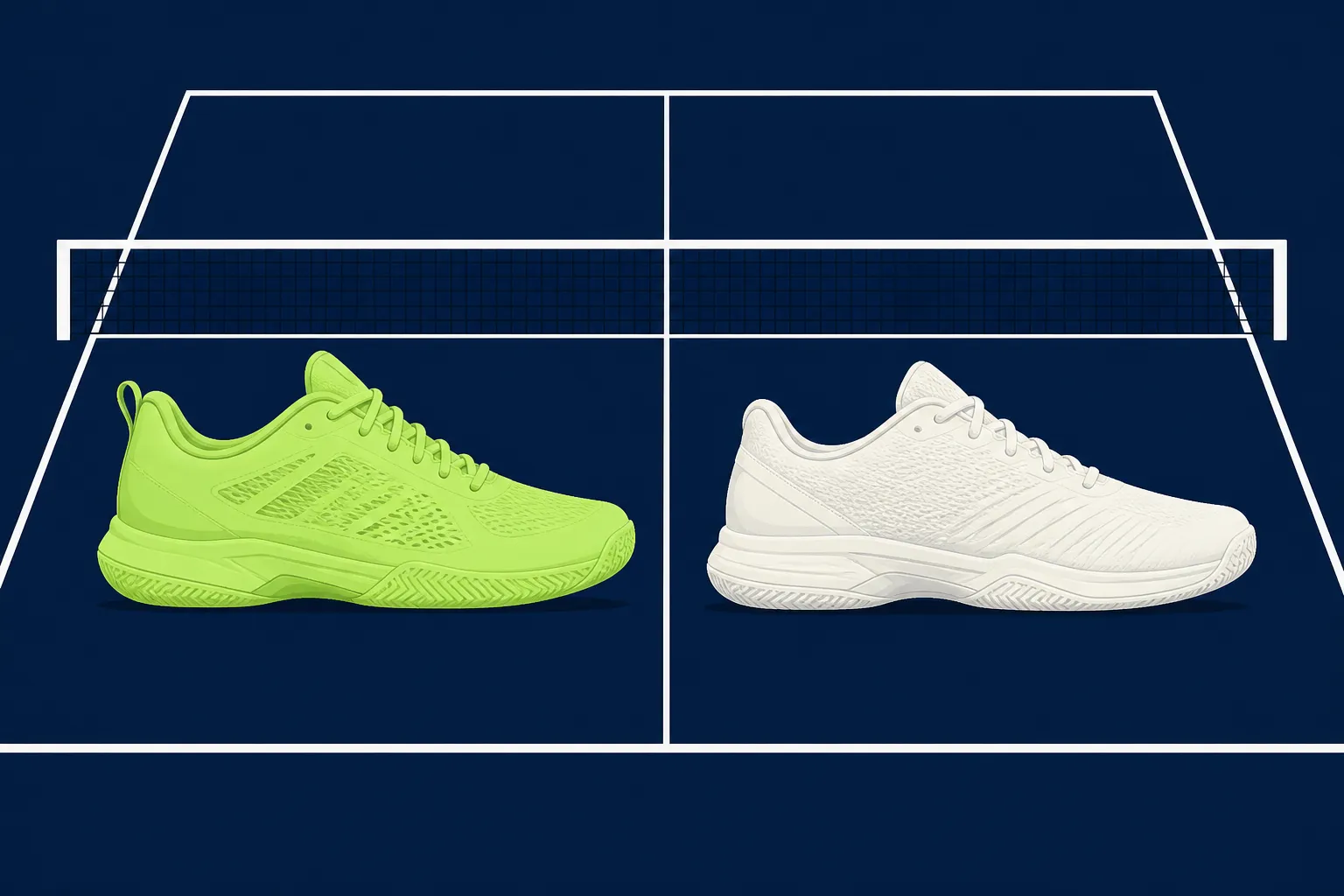
The short answer: Pickleball shoes vs tennis shoes comes down to lateral stability, outsole pattern, and court surface match. Clean all-court tennis shoes are fine short-term for casual play. Weekly players should prioritize side support and a tread that grips your actual court type.
You do not need a new closet on day one. You do need to know when tennis shoes stop being a smart shortcut. This guide compares pickleball shoes vs tennis shoes on lateral support, outsole design, and surface fit. Criteria are research-based from court-shoe construction norms and recurring player feedback. We have not run a formal wear-test lab on every model.
Pack gear properly while you decide: see our best pickleball backpack guide for how to carry shoes, paddles, and balls without turning your trunk into a locker. New to paddles too? Start with best pickleball paddle for beginners.
Why lateral movement changes the shoe job
Pickleball is not a straight-line sport. You lunge, split-step, backpedal, and cut sideways at the kitchen in bursts. Tennis has lateral work too, but pickleball repeats quick direction changes in a smaller box with less recovery time between points.
Shoe design follows that load. Court shoes use a wider, stable base, reinforced sidewalls, and midfoot support to limit ankle roll. Running shoes push cushion forward and often flex where you need rigidity on a hard cut.
If your foot slides inside the shoe or the upper folds on a sharp side step, that is a signal to upgrade, even if the tread looks fine.
Outsole patterns and court surfaces
Outsole rubber matters as much as marketing labels. Hard outdoor courts want durable herringbone or modified herringbone that releases dust instead of packing it. Smooth indoor gym floors want non-marking gum or indoor compounds that grip without scuffing the finish.
Clay tennis patterns are a poor match for typical pickleball hard courts. They can feel slippery or wear oddly on acrylic and sport-court surfaces. All-court tennis shoes overlap more often because they aim at hard courts already.
Check what you actually play on: public outdoor courts, coated indoor sport courts, or mixed community centers. Buy for that surface first, brand second.
When tennis shoes are OK short-term
Existing all-court or hard-court tennis shoes are reasonable for:
- First few open-play sessions while you learn footwork
- Occasional guest games once or twice a month
- Players who already own lightly worn court shoes with good lateral support
Retire them faster if you play twice a week, feel wobble on dink battles, or see smooth tread patches under the ball of the foot. Pickleball accelerates outsole wear because you pivot more in a smaller area.
Running shoes, cross-trainers with soft sidewalls, and lifestyle sneakers are not in the "OK short-term" bucket. They are injury shortcuts.
What dedicated pickleball shoes add
Purpose-built pickleball shoes usually emphasize:
- Lower profile stability for quick kitchen resets
- Reinforced upper around the midfoot for lateral cuts
- Court-specific rubber tuned for common pickleball surfaces
- Weight balance that avoids heavy running-style heel stacks
Some models are tennis platforms with pickleball branding. That is not automatically bad if the spec sheet matches your court. Read outsole type, lateral support features, and return policy instead of logo hype.
We will publish a full shoe picks guide when the pillar page is rebuilt. Until then, shop court shoes with clear surface tags and strong return windows.
Fit checks before you buy
Try shoes with the socks you actually wear. Leave a thumb width at the toe for lunges. Lace snug through the midfoot so your heel does not slide on stops.
Walk a figure-eight pattern in the store or at home on clean floors if returns allow. You should feel stable on side steps, not like the shoe is tipping. Break-in should be hours, not weeks of blisters.
Replace court shoes when lateral grip fades or the midsole feels dead, even if the upper looks fine. Dead cushion hides impact until your knees complain.
Bottom line
Pickleball shoes vs tennis shoes is not a purity test. It is a safety and performance match for how often you play and what surface you use. Tennis all-court models can bridge the gap early. Regular players benefit from lateral-first court shoes built for stop-and-go kitchen work.
When your shoe situation is sorted, keep paddles and balls organized with our backpack guide and dial in your first face with best pickleball paddle for beginners.
Surface cheat sheet
| Surface | Outsole target | Tennis shoe OK? |
|---|---|---|
| Outdoor hard / acrylic | Durable herringbone, hard-court rubber | Often yes if tread is fresh |
| Indoor sport court | Non-marking indoor gum | Only if sole is non-marking and grips |
| Mixed community gym | Carry indoor pair if required | All-court tennis is a maybe, check rules |
| Clay tennis courts | Not ideal for pickleball hard courts | Skip for regular pickleball use |
Use this table when reading shoe boxes online. Brands love vague "court" labels. Match rubber to the floor you actually play on.
Signs it is time to replace court shoes
- Smooth patches under the forefoot or heel
- Sidewall creases that fold inward on lateral steps
- Heel counter feels soft or collapses when you squeeze
- Toe drag has worn through overlay rubber
- Knee or ankle fatigue spikes after normal session length
Court shoes do not die loudly. They fade in grip and stability first. Rotating two pairs if you play four or more days a week extends life and keeps a backup ready for wet outdoor days.
Frequently Asked Questions
Can I wear tennis shoes for pickleball?
Often yes for casual open play, especially on hard courts with a herringbone or all-court outsole. Replace them sooner if you feel ankle roll on quick direction changes or if the tread is worn smooth.
What is the main difference between pickleball shoes and tennis shoes?
Pickleball shoes prioritize lateral stability and quick stops for shorter courts and faster kitchen movement. Tennis shoes vary by surface model, but many all-court versions overlap for recreational pickleball.
Do I need indoor pickleball shoes on outdoor courts?
Match the outsole to the surface. Outdoor hard courts need durable rubber with good lateral grip. Indoor gym floors need non-marking soles. Using the wrong pattern can slip or wear fast.
Are running shoes OK for pickleball?
No for regular play. Running shoes are built forward, not sideways. Lateral cuts in pickleball need a stable base and court outsole, not soft heel cushioning meant for straight-line miles.
When should I buy dedicated pickleball shoes?
When you play weekly, feel foot or ankle fatigue on cuts, or wear through tennis tread in a few months. At that point, purpose-built lateral support pays off.